
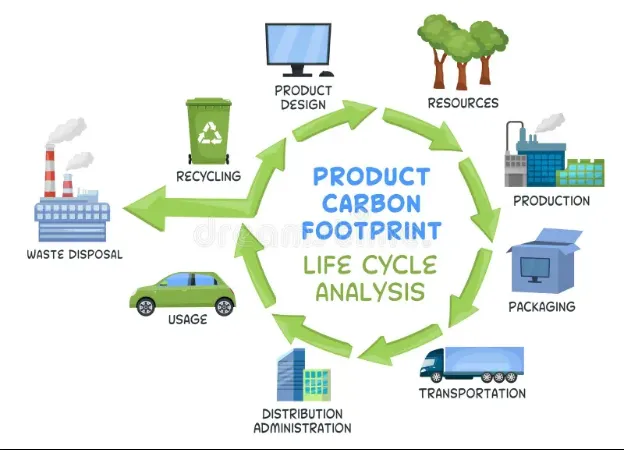
A product’s environmental impact is shaped long before it reaches a customer. Raw materials, manufacturing energy, packaging, transport, and disposal all contribute to the emissions associated with its life cycle. Measuring these sources helps businesses move beyond broad sustainability claims and understand where meaningful, lasting reductions are possible and measurable.
A reliable assessment also gives buyers clearer information and helps manufacturers respond to reporting expectations. Reviewing calculations, boundaries, and supporting evidence through product carbon footprint verification adds confidence in the reported results and helps ensure environmental claims are supported by credible information.
Establishing A Clear Foundation For Carbon Measurement
A meaningful assessment starts with a defined product, purpose, and life cycle boundary. These decisions establish a consistent basis for collecting information, calculating emissions, and interpreting results accurately.
1. Define The Product And Assessment Purpose
Identify the product, its intended function, and the reason for measuring its footprint. The purpose may involve internal improvements, customer disclosure, procurement requirements, or environmental reporting. Specify the product version and manufacturing site to establish a clear assessment scope.
2. Select A Suitable Functional Unit
Choose a functional unit that represents the product’s purpose, such as one item, one kilogram of material, or a defined quantity delivered over time. This reference makes emissions calculations consistent and supports meaningful comparisons between products with similar functions.
3. Set Life Cycle Boundaries
Determine which stages the assessment covers, from raw material extraction and manufacturing to distribution, use, and disposal. Choose cradle-to-gate or cradle-to-grave boundaries according to the study’s purpose. Document exclusions clearly to prevent misleading interpretations of reported emissions.
Strengthening Data Quality Across The Product Life Cycle
Good calculations depend on complete, traceable information from suppliers, production teams, logistics partners, and other relevant sources throughout the supply chain.
Gather Primary And Secondary Data
Accurate carbon footprint calculations depend on reliable information from across the product system. Collect activity data for materials, energy consumption, manufacturing, packaging, and transportation.
● Record material quantities: Document the types and amounts of raw materials used in production, including recycled content where applicable.
● Measure energy consumption: Gather electricity and fuel records for manufacturing facilities and relevant production processes.
● Account for process losses: Include waste, rejected materials, production losses, and other activities that influence total emissions.
● Collect supplier information: Use facility and supplier records wherever possible to reflect actual operating conditions.
● Document supporting sources: Record reporting periods, measurement units, assumptions, and emission data references for future review.
When product carbon footprint verification forms part of the assessment, organised records help reviewers trace inputs and evaluate the reliability of reported information.
Check Data Completeness And Consistency
A dependable assessment requires complete information, consistent measurements, and clearly documented assumptions. Review the collected data before beginning final calculations.
● Review life cycle coverage: Confirm that relevant suppliers, materials, manufacturing processes, packaging, and transportation stages are included.
● Standardise measurement units: Convert quantities into compatible units to prevent calculation errors and misleading comparisons.
● Check reporting periods: Ensure production figures, energy records, and supplier information cover suitable, comparable operating periods.
● Identify missing information: Highlight unavailable figures and explain the estimation methods used to address data gaps.
● Maintain supporting records: Preserve spreadsheets, source documents, calculation versions, and assumptions so results can be reproduced.
A structured quality review helps distinguish measured information from estimates and makes the assessment easier to examine.
Apply Relevant Emission Factors
Emission factors translate collected activity data into greenhouse gas emissions. Selecting suitable values is essential for producing consistent and meaningful calculations.
● Match factors to activities: Choose values appropriate for the material, energy source, manufacturing process, geography, and reporting period.
● Prioritise specific information: Use supplier-specific or facility-specific factors when reliable information is available instead of relying automatically on generic averages.
● Review factor references: Check the source, measurement units, greenhouse gases covered, and global warming potential basis.
● Apply consistent conversions: Use compatible calculation methods across materials, processes, and life cycle stages.
● Maintain factor records: Document references, assumptions, updates, and changes that could affect comparisons between reporting periods.
Keeping emission factors traceable supports calculation accuracy and helps reviewers understand the basis of reported results.
Identify Hotspots And Reduction Opportunities
After calculating emissions, examine the results to identify which materials, processes, or life cycle stages contribute most significantly.
● Locate major emission sources: Compare contributions from raw materials, manufacturing, energy use, packaging, and transportation to identify priority areas.
● Explore material alternatives: Consider recycled content, material efficiency, and lower-emission inputs where product performance and quality can be maintained.
● Improve manufacturing processes: Review energy efficiency, production yields, equipment performance, and opportunities to reduce material waste.
● Evaluate transportation options: Assess alternative routes, transport modes, shipment planning, and supplier locations to identify practical improvements.
● Measure the impact of changes: Recalculate emissions after improvements using consistent boundaries and comparable data to establish whether reductions are supported by evidence.
Prioritising realistic improvements helps organisations turn assessment findings into measurable action while considering possible emission trade-offs elsewhere in the product life cycle.
Improving Credibility Through Review And Reporting
A transparent report clearly explains the assessment method, supporting data, assumptions, limitations, and results. Organised evidence makes independent review more efficient and helps build confidence in the findings. Calculation files, supplier declarations, invoices, energy records, and emission factor references should support reported figures. The final report should also state its functional unit, system boundary, and reference period. When presenting comparisons, ensure products follow compatible methods and boundaries. Clear qualifications help customers and decision-makers interpret results responsibly without overstating what the assessment demonstrates.
Conclusion: Building Confidence In Product Footprint Results
A credible product footprint depends on clear boundaries, reliable data, consistent calculations, and transparent reporting. Regularly reviewing supplier information and assumptions helps businesses identify emission sources and prioritise improvements. Independent assessment further strengthens confidence in reported results. ISO 14067 verification supports evaluating product carbon footprint information against relevant standard requirements.
KBS Certification Services Ltd provides verification, certification, auditing, and sustainability assurance services, including product carbon footprinting, life cycle assessment, greenhouse gas verification, and ESG reporting assurance. Their services help organisations review emissions data, strengthen documentation, identify compliance gaps, and demonstrate conformity with recognised standards. This supports credible environmental reporting and greater stakeholder confidence.
