
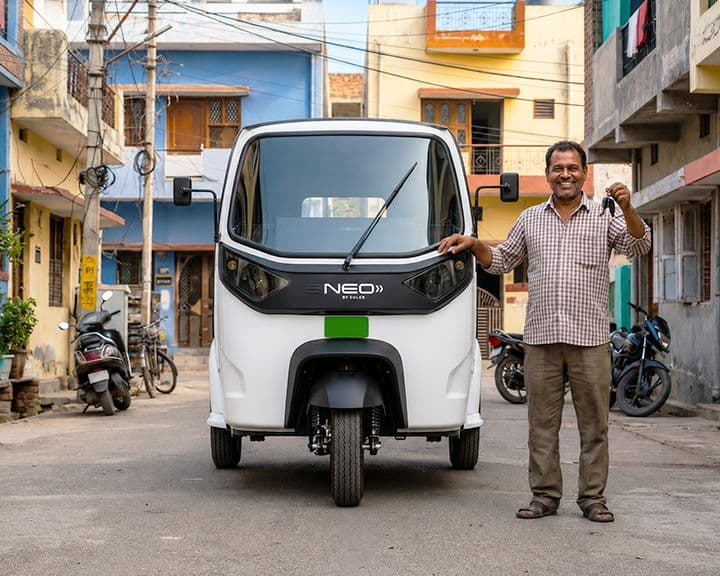
You step off the metro, or out of your hotel gate, and realize the map still shows another kilometre or two before you actually reach where you’re going. Maybe it’s a temple tucked down a lane too narrow for cars, or a guesthouse a cab driver flatly refused to enter, or a market that only makes sense once you’re walking through it. For as long as most of us can remember, an 3 seater auto rickshaw has filled that gap. Lately though, a lot of those autos have gone quiet, literally, and it’s changing the experience more than people expect.
The Bit Between the Station and Your Actual Destination
India’s public transport handles the big stretches reasonably well. Metros and buses get you across a city without much fuss. It’s that last piece, the walk-or-ride distance from a station to your actual address, that’s always been messier, especially in old city quarters where the roads weren’t built with anything wider than a rickshaw in mind. Autos have always solved this. What’s changing is which kind of auto shows up.
I noticed it myself on a trip to Jaipur a while back. Got into what I assumed was a regular auto near the station, and it took me a second to realize there was no engine sound at all. No shudder when it started moving. Just a smooth pull away from the curb. Small thing, but it stuck with me.
Tourists Don’t Choose It on Purpose, But They Notice
Here’s the honest part: almost nobody books an “electric auto” specifically. You open an app, or you wave one down outside a monument, and it turns out to be electric. It’s only after the ride that people start noticing why it felt different.
The exhaust smell is gone, for one. Anyone who’s sat behind a diesel auto in traffic knows exactly what I mean, that thick, hot smell that clings to your clothes. It’s just not there anymore.
The ride itself tends to feel steadier too, especially at the slow crawl through a crowded lane or a market street. Electric motors respond differently at low speed compared to combustion engines, and a lot of drivers will tell you unprompted that it’s easier to control in tight spaces.
And then there’s the quieter thing, the one people don’t always say out loud but seem to feel: a small sense that they’re not adding to the smog every time they take a short ride somewhere. It doesn’t change a trip dramatically. But it changes how the trip sits with you afterward.
Where You’ll Actually See This Happening
Delhi, Jaipur, Bengaluru, Pune, these are the cities where the shift is most visible right now, partly because of state-level policy pushing electric fleets and partly because ride apps have started listing electric options more openly. Around the busier tourist stretches, old markets, monument entrances, station exits, it’s genuinely common now to end up in an electric auto without going looking for one.
Heritage cities benefit from this in a particular way. The lanes were never meant for anything bulky, and electric autos fit into that old street rhythm without adding to the noise and pollution that already builds up in areas packed with visitors all day.
A Few Practical Things, If You’re Planning Around This
If you’d rather seek out electric autos on purpose during your trip, here’s what actually helps. Some booking apps let you filter for electric rides, though it depends heavily on the city and the platform you’re using, so don’t count on it everywhere. Fares generally land close to what a regular auto would cost, occasionally a touch higher, but nothing dramatic. And if you’re curious, just ask the driver. Most are happy to talk about it, and a good number mention that running costs dropped and the ride feels less tiring on their end too, which is as much a reason for the switch as anything environmental.
One thing that isn’t really your concern as a passenger: charging. If a driver mentions needing to charge up soon after dropping you off, that’s just part of how their day works now, not something you need to plan around.
It’s a Small Change, But It Adds Up
None of this rewrites how tourism works in India. It’s a quiet, incremental shift, one ride at a time, in cities trying to clear their air a little. But for a traveler, it’s a nice thing to notice, that even the smallest stretch of a journey, the last kilometre between a station and wherever you’re actually headed, is part of a bigger story these cities are working through.
So next time you’re covering that last bit of a trip, pay attention to whether the auto hums instead of rattles. It’s a small detail. But it usually means something good is happening underneath it.
